
The May Blue Moon: Gardening at the Edge of Summer
There is a particular moment in the garden when everything feels full — not just growing, but reaching. This is the point May Blue Moon gardening speaks to, when plants spill over paths, stretch toward the light, and bloom faster than you can keep up with, turning even the most carefully tended beds into something a little wild.
By the end of May, gardening begins to shift. The herbs are lush and fragrant, flowers are opening in earnest and even the spaces that struggled earlier in the season seem to be making one final attempt to fill in. What you planted weeks ago is no longer uncertain — the garden is showing you, clearly, what has taken hold and what has not.
And just as it reaches this point, this year a second full moon rises.
The May Blue Moon arrives at a time when gardening is less about starting and more about responding — harvesting what is ready, shaping what is overgrowing and letting go of what never quite established. It isn’t rare in a mystical sense, but it is rare enough to make you pause and take stock.
Because this moon doesn’t mark a beginning. It marks a threshold — a moment where the work of spring gives way to the realities of summer and the garden asks something different of you.

Table of Contents
What the May Blue Moon Actually Is
In 2026, the May Blue Moon falls on May 31, reaching peak fullness in the early morning hours — the second full moon in a single calendar month, following the Flower Moon at the beginning of May.
This is what’s commonly called a “Blue Moon”: not a change in color or energy but a matter of timing. It is an extra full moon that appears when the lunar cycle and the calendar fall slightly out of sync. And while it doesn’t change the fundamental rules of gardening or override the seasons, timing like this still matters.

This year’s only Blue Moon arrives at the very end of spring. It’s a moment when the garden is no longer in the uncertain stage of becoming but in the clarity of revealing what it will be. By now, what has taken root is clear. The plants that are thriving have begun to show real strength, filling out their space and pushing into bloom, while anything that struggled earlier in the season is much harder to overlook.
In that way, the May Blue Moon doesn’t introduce something new to your garden — it simply illuminates what is already there, asking you to see it clearly before the season shifts.
The May Blue Moon and Your Garden
The Full Moon in the Garden
For gardeners who follow lunar rhythms — whether through traditional moon gardening or biodynamic gardening — the full moon marks a distinct shift in how the garden behaves.
As the moon reaches fullness, its increased light and gravitational pull are believed to influence moisture in the soil and within the plants themselves. Growth energy is drawn upward, concentrating in the parts of the plant you can see: leaves, stems, flowers and fruit. Even if you don’t follow lunar planting strictly, this often aligns with what you’ll notice in the garden — a sense of fullness, rapid growth and visible abundance.
Because of this, the full moon is less about starting new growth and more about working with what has already developed.
In practical terms, this is a time for:
- harvesting herbs, greens and flowers at their peak
- observing plant health, structure and spacing
- pruning or pinching back growth to shape and manage energy
- gathering what is ready before it fades or becomes overgrown

May Blue Moon Gardening
The May Blue Moon builds directly on this same pattern of visibility — but extends it.
A full moon already represents a peak of abundance in the garden. When a second full moon arrives within the same month, that sense of fullness does not reset. Instead, it layers — creating a second moment of completion within the same seasonal window.
By late May, the first surge of spring growth has already played out. What once felt like potential has become established reality. The garden is no longer building toward fullness — it is sitting inside it.
Because this moon falls at the edge of summer, it often reveals a sense of overflow. Beds are crowded, growth is accelerating and certain plants begin to push past their ideal moment. Without intervention, that abundance can quickly shift into stress as heat and competition increase.
This is where the Blue Moon becomes useful in the garden — not as a different system, but as a clearer reading of the same one.
It highlights what is now ready to be decided:
- what is thriving and worth continuing to support
- what is overgrowing and needs to be cut back
- what never fully established and can be removed
Not everything in a spring garden is meant to carry forward into summer. Some plants are at their peak, some are beginning to decline and others are no longer aligned with the season ahead.
The Blue Moon doesn’t change how the garden grows — it simply intensifies what is already visible, making it easier to respond before the seasonal shift into summer begins.
What To Do in the May Blue Moon Garden
In the days surrounding the May Blue Moon, step into your garden and look closely.
This isn’t a moment for adding more or starting over — it’s a moment for reading what’s already there. Under a second full moon, when growth has fully expressed itself, patterns become easier to see and decisions become clearer.
Most gardens at this point will be telling three distinct stories: what is thriving, what is overreaching and what didn’t take.
What is Thriving

Some plants will be unmistakably strong — lush, full and actively growing into their space. These are the ones carrying your garden into summer.
Support them while they are in momentum. Add mulch now to hold in moisture as temperatures rise. Put in stakes or trellises before weight and summer storms make them harder to manage. Continue harvesting herbs and greens regularly — especially those at peak flavor under full moon energy — so the plant stays productive rather than tipping into exhaustion. Cut flowers at full bloom for bouquets, drying or pressing while they are at their most expressive.
These plants are not just surviving — they are actively leading the season forward.
What is Overreaching
Other areas may feel crowded or slightly chaotic, with growth beginning to tangle, compete or exhaust itself. This is a natural result of late-spring abundance, but it becomes a problem if it is left unchecked into summer.
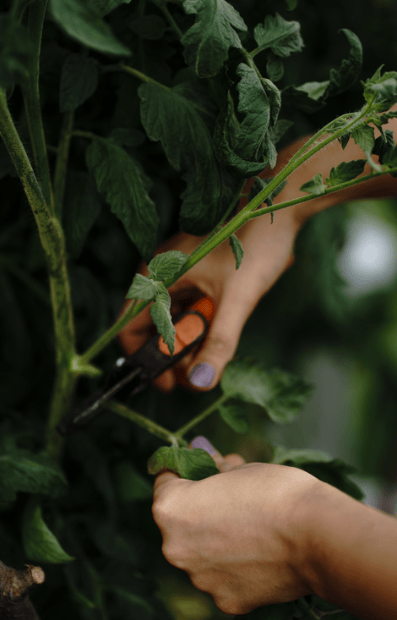
This is where gentle correction matters. Prune excess stems to open airflow and reduce humidity pressure. Thin crowded areas so plants stop competing for light and nutrients.
Shape growth now, while it is still flexible, rather than waiting until heat stress makes recovery harder.
As you work, you’re not reducing the garden — you’re restoring balance so everything that remains can actually thrive.
What Didn’t Take
And then there are the spaces that never quite filled in — where growth is sparse, uneven or stalled.

By this point in the season, that story is usually clear. Instead of continuing to invest energy in what is not responding, clear it out. Free the space, light and nutrients so they can move toward what is already working.
Not everything planted in spring is meant to carry through the entire season, and letting go of what didn’t take is part of strengthening the whole system.

Celebrating the May Blue Moon
On the night of the May Blue Moon, you don’t need anything elaborate. This is less about ceremony and more about quiet attention — standing at the threshold of spring and summer and noticing what is already true in your growing spaces.
Whether you have a full garden, a small balcony or a few herbs growing on a sunny windowsill, the practice is the same: pause and simply observe what is living and unfolding around you.
Light a candle and step outside or sit near your plants. Let your attention soften. This is not about changing anything — only noticing.
As you sit with that light, you might gently reflect on:
what is thriving and clearly finding its rhythm
what has struggled, slowed, or not fully taken
what you feel gratitude for in this season of growth

When you feel ready, you can quietly set an intention for the season ahead — not for more, but for clarity. For tending what is already strong. Noticing more closely. Releasing what is no longer asking for your attention.
Let the candle burn for a while, then extinguish it with the sense that nothing is unfinished — only unfolding, in whatever space it is growing in.

Welcoming Summer with the May Blue Moon
After the May Blue Moon, something subtle but important begins to shift in the garden.
The softness of spring gives way to the intensity of summer. Heat presses closer into the soil. Growth becomes less exploratory and more focused. What was once expansion turns toward endurance — carrying forward what has already taken root.
This is the space the Blue Moon occupies: not fully spring, not yet summer, but a bridge between the two — where everything has already revealed itself, and nothing remains uncertain.
It offers a final, honest look at what your garden has become this season. And with that clarity comes a quiet decision: what to support, what to cut back and what to let go of entirely.

Frequently Asked Questions: May Blue Moon Gardening
The Blue Moon itself doesn’t change how plants grow or override seasonal conditions, but it does coincide with a meaningful point in the gardening season. In May Blue Moon gardening, it simply highlights what is already happening in the garden — making it easier to see what is thriving, what is struggling and what needs to be harvested or cut back as the season shifts toward summer.
In traditional moon gardening and biodynamic practices, the full moon is considered a time of peak above-ground activity. This makes it ideal for harvesting herbs, flowers and leafy greens at their strongest, as well as pruning, shaping and observing plant health.
The May Blue Moon is not considered the best time for starting seeds or transplanting, especially for plants that need strong root establishment. Because full moon energy is associated with visible, above-ground growth, it’s better suited for harvesting, maintenance and garden observation.
The Flower Moon is the first full moon in May and is associated with peak spring bloom and active growth in the garden. The May Blue Moon is the second full moon of the same month. In gardening terms, it reflects a moment of fullness and transition rather than early-season expansion.
The best approach is to respond rather than initiate. Focus on harvesting what is ready, pruning what is overgrown, supporting strong plants and removing what is no longer thriving.
Don’t forget to explore my other moon posts…all available under the On The Moon tag!


